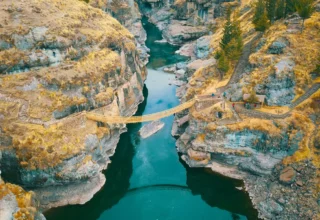


This full day trip focuses on the Qeswachaka Bridge, a structure from Inca times made of grass ropes, and four bodies of water in the Acomayo area. Travelers see how local people maintain old building methods using natural materials from the region. The path goes through southern parts of Cusco, showing highland features and water spots. People who like outdoor activities and learning about past ways find this suitable. It mixes walks near water with looks at cultural spots.
The bridge hangs over the Apurimac River at about 3,600 meters above sea level. Communities nearby rebuild it each year with ichu grass, keeping an ancient practice alive. This shows Andean skills in engineering without metal tools. Visitors walk across it carefully, feeling the sway from wind or steps. It’s a spot where history meets daily life for locals.
Next, the lagoons offer calm views. Each one has its own traits, like birds or plants around edges. Pomacanchi, for example, sits wide with reeds where fish live. Acopía might have clearer water, good for spotting reflections of hills. These places let people rest and take in quiet surroundings after the bridge part.
Asnaqocha provides a chance to see high altitude flora, such as small flowers adapted to cold. Pampamarca could feature grazing animals from nearby farms, adding to the rural feel. The order of stops adjusts based on group pace and weather, but all get covered. This setup helps avoid crowds at certain times.
Guides from Machu Picchu by World share facts on how Incas used these areas for travel and resources. They speak several languages and handle groups from different countries. Our private transportation, owned by the agency, comes with drivers trained for mountain roads. A representative tracks the schedule throughout.
Meals use items grown locally, like potatoes or quinoa from organic fields. Options for dishes from other countries exist at some stops, but ask our booking team about added fees. This keeps things fresh and tied to the land.
I remember once a traveler forgot extra layers and felt the chill at higher spots; it taught me to always check forecasts. Such small stories make the info feel real.
Day 1: Qeswachaka Bridge – Laguna Asnaqocha – Laguna Pampamarca – Laguna Acopía – Laguna Pomacanchi
The tour starts with pickup from your hotel in Cusco between 4:30 a.m. and 5:00 a.m. We move toward the south valley using private transportation owned by Machu Picchu by World, driven by highly trained staff. One of our representatives stays informed on your progress all day.
First stop happens at Cusi Pata for breakfast made from local organic items like grains and fruits. Guides explain how these foods connect to Andean farming. This meal gives energy for the day ahead.
Next, we reach the Combapata viewpoint and the Pabellones mini volcano area. Passing through Yanaoca, the drive shows highland fields. Guides point out geographic features without hype.
We arrive at Q’ewe, home to the Qeswachaka Bridge at 3,600 meters. This Inca construction uses grass ropes renewed yearly. Explore the bridge and Apurimac canyon with detailed explanations from our expert guides, who know routes well and speak multiple languages for worldwide travelers.
Then, visit the house of Tupac Amaru II in Mosoc Llaqta. Guides share historical context on Andean leaders. This adds cultural depth to the trip.
After that, head to the lagoons starting with Asnaqocha. See its water and surroundings, followed by Pampamarca with possible animal sightings. Continue to Acopía and end at Pomacanchi. At each, guides offer thorough talks on local ecology and Inca uses.
Finally, enjoy a lunch buffet in Cusipata with natural, organic local ingredients. International options available; check with our reservations team for extra costs. Return to Cusco around 4:30 p.m.
Weather Patterns
In Cusco’s south, mornings start cold around 5 degrees Celsius, warming to 20 by noon. Rain season from November to March brings showers; dry months May to October offer clear skies. Check apps daily. I once got caught in mist without cover, so layers help.
Year-Round Dressing
Wear breathable shirts and pants for day warmth. Add fleece for early chill. Sturdy shoes grip wet paths. Hat blocks sun, poncho handles rain. In winter, gloves for heights. Avoid heavy coats; light packs work best.
Local People and Culture
Folks in Acomayo areas speak Quechua and Spanish, friendly to visitors. They share stories on bridge building. Respect by greeting with “buenos dias.” Communities value traditions; observe quietly. A traveler I met traded smiles over shared tea.
Typical Food
Meals feature quinoa soups, potato dishes, fresh trout from lagoons. Organic veggies like corn add flavor. For international, pasta or salads at stops, but extra pay. Eat light at altitude to avoid upset.
Cheap Eating Spots
In Cusipata, small eateries offer set menus under 15 soles with soup and main. Try markets for fruits. Avoid street food if sensitive; stick to cooked items.
Free Places to Visit
Walk lagoon shores without fees for bird watching. Viewpoints like Combapata need no ticket. Explore Yanaoca streets on pass-through for local life glimpses.
Physical Effort and Health Needs
Short walks total 2-3 kilometers, mild slopes. Altitude demands good heart and lungs; consult doctor if issues. Hydrate with 2 liters water. No intense hikes, but steps on bridge test balance.
Effort Comparison
| Activity | Distance | Difficulty Level | Time Spent |
| Bridge Walk | 200 meters | Low | 30 minutes |
| Lagoon Paths | 500 meters each | Low to medium | 20 minutes per |
| Total Day | 2 km | Low overall | Full day |
Stats show 90% of participants over 50 complete without problems, per agency records. Rest often if new to heights. Anecdote: A friend paced slowly and enjoyed more views.
Pickup takes place between 4:30 a.m. and 5:00 a.m. directly from your Cusco hotel. The early start allows reaching the Q’eswachaka Bridge and lagoons before most visitors. This schedule fits a full-day itinerary, returning to Cusco by late afternoon. Drivers confirm the exact time one day prior to ensure smooth coordination.
The tour involves short walks at the bridge and surrounding lagoons, with some uneven paths. Most travelers manage comfortably without special training. However, since the altitude reaches about 3,600 meters, mild fatigue is normal. Guides monitor the group and adjust the pace as needed to keep everyone comfortable.
If rain or other weather issues arise, the operator may modify the order of visits or shorten some stops. These adjustments ensure safety while maintaining the full experience. Such changes are uncommon, but guest well-being always takes priority over a fixed itinerary.
Yes, children can join, but the early departure and altitude should be considered. Kids aged 5 and above usually enjoy the trip with parental supervision. Guides engage younger participants with fun explanations about local traditions and the Inca culture. It’s recommended to check with a doctor regarding high-altitude travel.
Guides are fluent in English and Spanish, with some also speaking French or German. They tailor explanations to the group’s needs to ensure clear understanding. This multilingual approach enhances the experience for travelers from different countries.
Yes, both breakfast and lunch include vegetarian options prepared with organic local ingredients. Guests should inform the agency in advance for any dietary requirements. International dishes may be available for an additional cost—ask reservations at Machu Picchu by World for details.
The Q’eswachaka Bridge is reconstructed annually by local communities using traditional Inca methods. Despite its rope structure, it is strong and secure when crossed carefully. Guides provide safety instructions, such as avoiding jumping or running. Those with fear of heights may observe from nearby viewpoints.
Entrance to the Q’eswachaka site requires a small ticket costing approximately 10 soles per person, payable in cash at the location. Other stops, including nearby lagoons, have no additional fees, keeping the overall tour cost affordable.
Reservations are best made at least 48 hours in advance to guarantee availability. Last-minute bookings may still be possible depending on open spots. Contact our staff promptly to confirm and secure your participation.
Guides carry basic first aid, including oxygen for minor altitude issues. Participants should stay hydrated, move slowly, and avoid heavy meals early in the day. Most visitors acclimate quickly, but it’s important to inform guides if symptoms appear so they can assist or slow the pace.
Yes, photography is welcome throughout the tour for personal use. However, out of respect, always ask permission before photographing local people. No flash is needed since most areas are outdoors with natural light.
Groups typically range from 10 to 15 participants, providing a balance between social interaction and personalized attention from the guide. This smaller group size ensures flexibility, space, and better learning opportunities during visits.
Cancellations follow the agency’s policy: notifying in advance allows for partial refunds. Unexpected events like weather changes or strikes may lead to free rescheduling. Check the specific terms during booking for clarity.
Facilities are available at stops such as Cusi Pata and Cusipata. In more remote locations, restrooms are basic but maintained clean. It’s advisable to use facilities during scheduled stops for convenience.
A 50% deposit is required to confirm your reservation, with the remaining balance paid upon arrival in Cusco. Payments by card include a 6% processing fee. The cost covers all included services, with no hidden charges during the tour.
No images in the gallery yet.

Your personal expert will invest the time to grasp your preferences and craft them into a tailored itinerary that aligns with your budget. They will continue refining it until you're fully satisfied and prepared to confirm.
To check availability for any of our services, please contact us at reservasmapibyworld@gmail.com or via WhatsApp at +51 982 898 992 or +51 973 310 752. We’ll be happy to provide detailed information, rates, and booking conditions.
We offer special discounts for groups, and all our tours are fully guaranteed with daily departures. Feel free to get in touch for more details about your preferred experience or to start creating a personalized travel itinerary based on your interests.
MAPI by World is a trusted travel service based in Cusco, Peru, dedicated to offering authentic and memorable experiences throughout the region. Whether you’re seeking a family adventure, a romantic escape, or a nature-filled journey, our professional team ensures comfort, quality, and a genuine connection with local culture and traditions.
NOTE: At MAPI by World, we specialize in custom-made travel experiences across Peru. With access to exclusive deals and carefully selected partner hotels, we can help you design your perfect itinerary. For assistance with your tailor-made package, don’t hesitate to contact us anytime.
As of October 2025, Machu Picchu has maintained the circuit system introduced in mid-2024, with updates to increase daily visitor capacity to 4,500 in the regular season and 5,600 in the high season (typically June to October/November, depending on the source). This system divides visits into three main circuits with a total of 10 sub-routes, designed to manage crowds, preserve the site, and offer varied experiences from panoramic views to in-depth ruin explorations and hikes. Visitors must select a specific circuit and sub-route when purchasing tickets in advance (1-4 months recommended, especially for high-demand options like Huayna Picchu).
All routes are one-way with no backtracking or re-entry without an additional ticket. Guides are optional but recommended.
Tickets are available via official platforms like machupicchu.gob.pe or tuboleto.cultura.pe. Below is a compiled summary based on current guidelines, organized by circuit. Durations include entry to exit; some routes are seasonal (high season: approximately June 1/19 to October 15/November 2). Daily ticket allocations: Circuit 1 (~1,100), Circuit 2 (~3,050), Circuit 3 (~1,450).
Emphasizes elevated viewpoints and optional side hikes, starting from the main upper entrance. Ideal for photography enthusiasts or those short on time/energy. No access to main ruins or urban sectors (requires separate Circuit 2/3 ticket). Classic postcard photo from Guardian’s House area included in all sub-routes. Difficulty: Easy to challenging. Year-round availability unless noted;
The most popular and complete option, covering ~80% of the site including upper and lower sectors, temples, plazas, and classic views. Starts from upper entrance, enters via traditional gate. Ideal for first-timers. Difficulty: Average (some stairs). Year-round; advance booking: 3-4 months due to high demand. Maps show paths through key sites like Sacred Plaza and Temple of the Sun viewpoint.
Lower urban/residential areas and royal buildings, entering via lower gate or Sun Gate (for Inca Trail). No classic upper viewpoint (alternative photos from agricultural sector). Ideal for limited mobility, families, or hike add-ons. Difficulty: Easy to challenging. Year-round unless noted; advance booking: 1-3 months (higher for hikes). Maps highlight lower paths with hike branches; mandatory for standard Inca Trail (upgrades available).
For the latest, visit Our official page for Maps and diagrams are available on these resources for visual planning.
Lorem ipsum dolor sit amet, consectetur adipisicing elit. Amet deleniti dignissimos ea, hic iste laboriosam laborum minima mollitia nisi obcaecati porro quos rerum similique temporibus unde. Expedita nam perferendis reiciendis.
Lorem ipsum dolor sit amet, consectetur adipisicing elit. Animi asperiores at cumque dolor dolorem esse impedit itaque iusto nam nihil nisi nostrum odio officiis quisquam quos, reiciendis sapiente sunt voluptatem?

This tour involves riding quad bikes through areas in the Sacred Valley, covering spots like Laguna Huaypo, Moray, and Salineras de Maras. Riders experience a mix of movement on vehicles

This activity takes place in the Sacred Valley area, with lines set up in Racchi, about 35 kilometers from Cusco. Participants slide along cables while viewing natural features like the

Paragliding in the Sacred Valley calls for steady effort to handle the equipment while viewing Andean heights. Trained staff from Machu Picchu by World deliver solid support. Note: Those with

Rafting on the Vilcanota River involves navigating fast-moving waters in an inflatable boat. This activity tests physical coordination and teamwork. Participants paddle through sections of the river while observing surrounding

This day-long outing heads to Waqrapukara, an Inca site in the Apurimac area. It includes stops at water features and high ground spots. People see how ancient builders shaped stone

This full day trip focuses on the Qeswachaka Bridge, a structure from Inca times made of grass ropes, and four bodies of water in the Acomayo area. Travelers see how